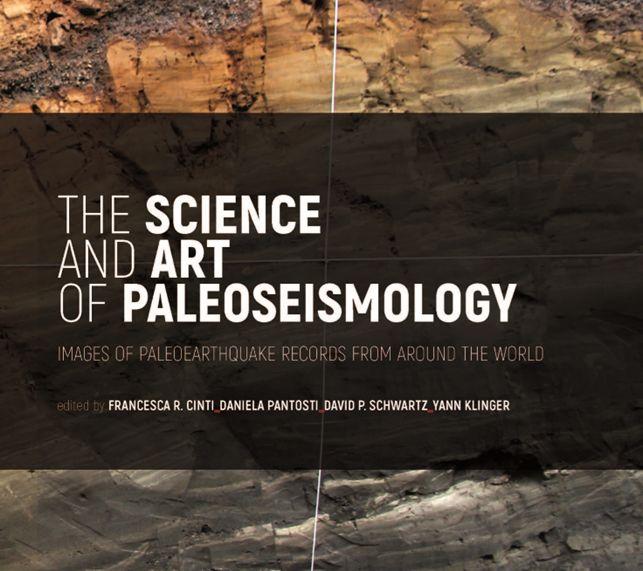
The Science and Art of Paleoseismology
Images of Paleoearthquake Records From Around The World
Edited by Francesca R. Cinti, Daniela Pantosti, David P. Schwartz, Yann Klinger
Printed in 2025
Our primary objective in publishing the book “The Science and Art of Paleoseismology” is to present observations through images of individual earthquake surface ruptures exposed in trenches across active faults in shallow continental crust across the globe.
With this book we aim to provide young researchers, students, and working professionals undertaking paleoseismologic studies with images of the variable expression of surface fault ruptures in trench exposures and their interpretations. The book contains examples from strike-slip, reverse, and normal fault ruptures in a range of tectonic settings as well as descriptions of the criteria and tools used for rupture identification, thereby strengthening the interpretation of surface-fault rupture histories and earthquake recurrence.
The book includes 28 case studies by a large number of contributors. 13 are on strike-slip, 6 on reverse, and 9 on normal faults. Each rupture example is developed in four pages of photos, trench logs, maps, and text.
If you are interested in obtaining a copy of the book you can get it for free but you need to cover the shipping fees. Please send a request to the email address below including the number of copies you are willing to receive and your complete postal address. We will provide you with instructions (size, weight, address, etc.) for preparing the pre-paid shipping label.
scienceandartpaleoseismology@gmail.com
A digital copy of the book is planned at a later date. Looking forward to getting your feedback
Francesca, Daniela, David, and Yann