The Seismological Society of America has re-opened abstract submission for a special session on the Christchurch and Japan earthquakes during the Memphis conference. Deadline for new abstracts on this topic is 25 March.
The Seismological Society of America‘s annual meeting 2011 will take place in Memphis, Tennessee from 13 – 15 April. A special focus is set on the New Madrid earthquakes, so paleoseismologists will definitely hear some interesting sessions there. Post meeting excursions are scheduled 16 April. For more information visit the official website.
more
Thanks to Alessandro I came across this incredible video of liquefaction occuring in the Tokyo Central Park during the M9.0 Japan earthquake. We can see a lot of very interesting features. First, cracks are opening, perfectly visible on the paved road and the cobble. Then we see the differential moving along those cracks, they are widening and narrowing and there’s vertical movement as well. Soon, the first ruptures appear in the meadows, despite the soft sediment there. more
The Japan M9.0 earthquake and the following tsunami are well documented by videos, photographs, sea-level measurements, seismograms etc. But how do we recognize such huge events if they happened some thousands of years ago? If there’s no historical report we would use earthquake environmental effects (EEE) for characterizing the earthquake and paleoseismicity. Let’s look what would be left from a 5000 year old earthquake and tsunami. more
An earthquake with a magnitude of Mw9.0 has occured 130 km east of Honshu, Japan in a depth of ~25 km. This had been the fourth or fifth strongest earthquake to be recorded by instrumental seismology. The quake caused significant destruction to the Honshu Island and triggered a tsunami that destroyed a number of harbours. In some places (Sendai), tsunami heights were reported to exceed 10 m. A tsunami warning has been released for wide parts of the Pacific, but in Hawaii only 1 m was observed, therefore the warnings for the US West Coast have been lowered. more
The Christchurch earthquake was the main topic of the Geoblogosphere this week. A great analysis on the effects was provided by Dave Petley in his Landslide Blog. Highly Allochthonous reasoned on seismic lensing, Ontario Geofish posted a lot on building security, and countless news sites came up with photos and reports. Frank Taylor, who hosted the GoogleEarthBlog before he left for a sailing trip around the world, was in Christchurch next to the Cathedral when the quake happened. On his Tahina Expedition website he reports on his experiences.
more
A M6.3 earthquake hit Christchurch, New Zealand on 22 February (21 Feb in UTC), leaving at least 75 people dead and hundreds injured or missing. Hundreds of houses were destroyed, including the Christchurch Cathedral, and damages will probably sum up to some billion dollars. On 4 September 2010 (3 Sept in UTC), a M7.0 event struck Christchurch, but then no one was killed. So: what’s the difference between the two events?
more
A nice short discussion about the Lorito et al., 2011 paper regarding the seismic gap at the Chilean coast and seismic slip during the 2010 earthquake, can be found at Highly Allochthonous. The discussion highlights the paper findings under the glance of the recent Bio-Bio earthquake from Friday, which took place in this so called Darwin gap.
Today on Friday, 11 February, a magnitude 7.0 earthquake occurred offshore in Chile near Concepcion at 36.5° S and 73° W in a depth of 28km. The MMI at the nearby large cities was reported by the USGS with V.
Update: The magnitude was corrected to 6.8. The earthquake was followed one hour later by a further event with a magnitude of 5.3 and 4 hours later again by a more shallow 6.3.
more
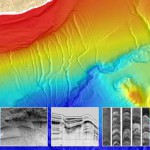 In its latest issue, EOS reports on the European Science Foundation conference “Submarine Paleoseismology – The Offshore Search of Large Holocene Earthquakes” which was held in Obergurgl, Austria from 11-16 September 2010.
more
 The Accredtionary Wedge #30 blog carnival hosted by Mountain Beltway came up with a tasting idea in January: The Geological Bake Sale. Explore and enjoy thematic food like the moon surface cake, the pillow lava bread and the debris flow vegetables. If you create a sweet fault or a tasty trench, we promise to publish it on paleoseismicity.org. more


